8 min read
Why Won't My Baby Sleep Through the Night? The 7 Most Common Causes
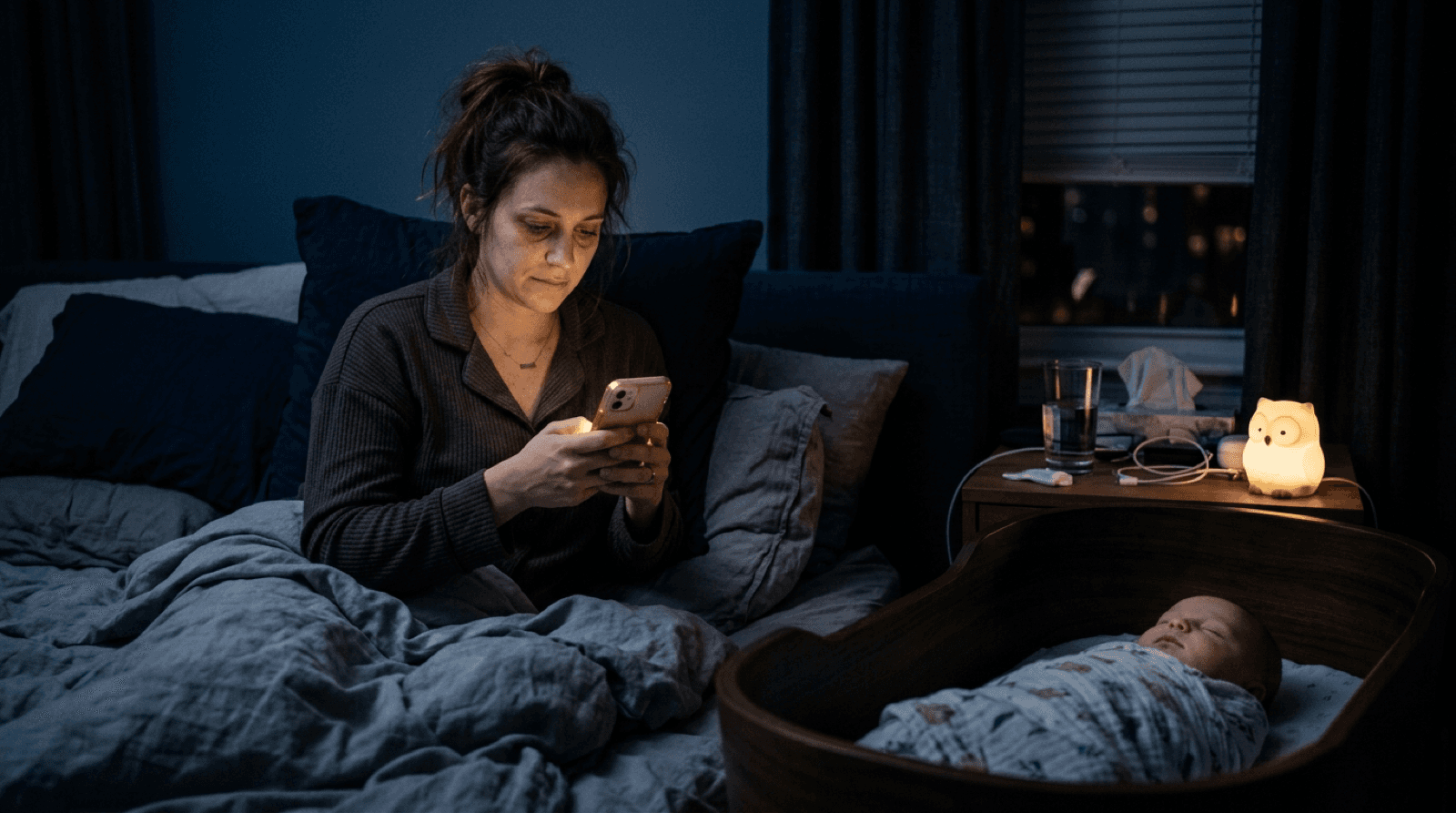
"Sleeping through the night" is one of the most search-engine-able phrases in early parenthood, and one of the most misleading. Most babies wake at night for identifiable reasons — and most of those reasons have a fix, even if the fix isn't instant. Here are the seven most common causes, roughly in order of how often they show up.
1. Sleep associations that require your help to restart
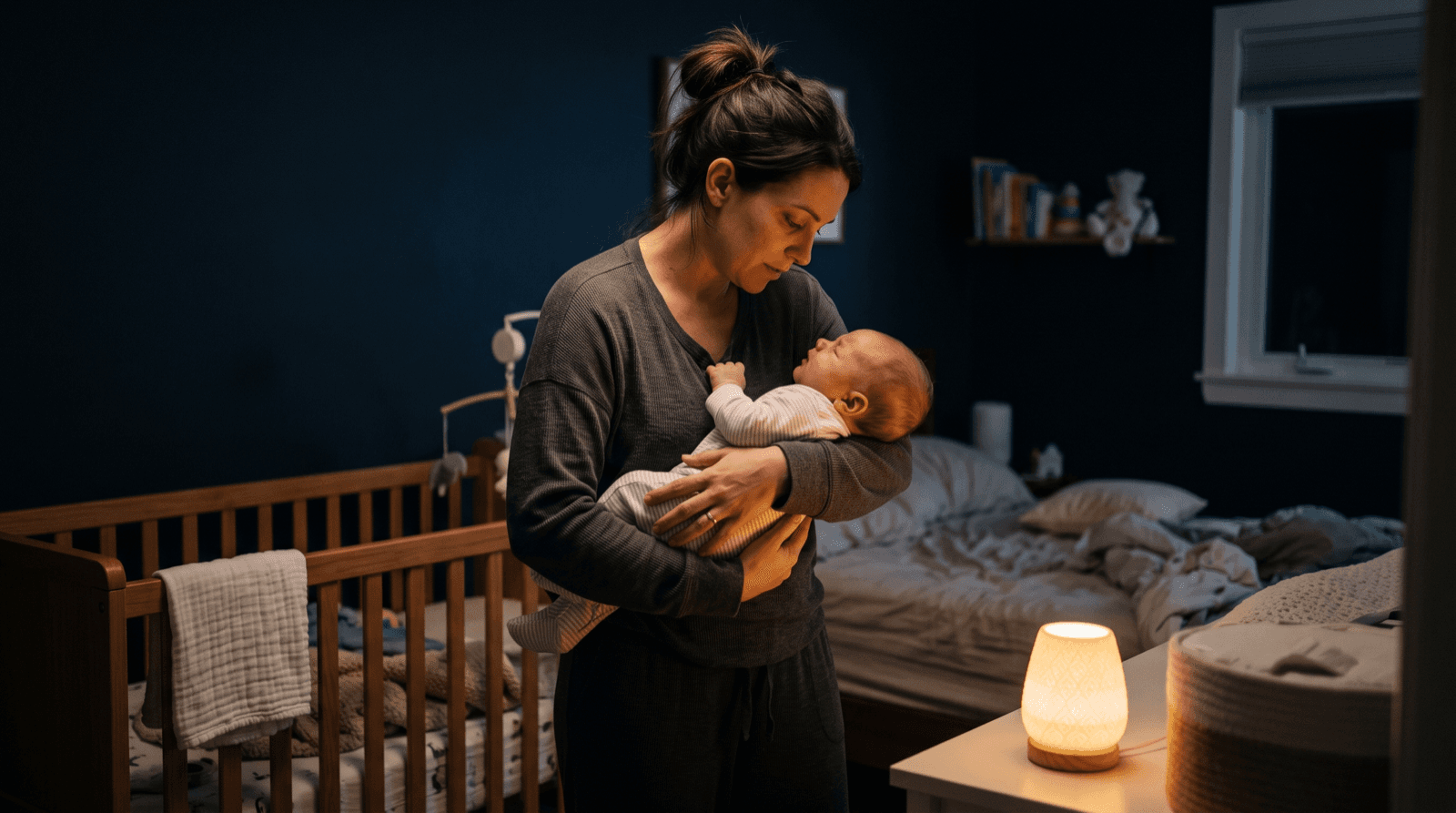
If your baby falls asleep being rocked, fed, or held, that's exactly what they'll look for when they surface briefly between sleep cycles overnight — which is normal and happens 4–6 times a night for everyone, baby and adult alike. The difference is whether your baby can get themselves back to sleep, or needs you to recreate the original conditions every single time.
2. Hunger, especially under 6 months
Younger babies have small stomachs and genuinely need overnight feeds for longer than many sleep guides imply. As long as weight gain is on track, most pediatricians agree night feeds can typically be reduced gradually from around 4–6 months — but doing it too early, before a baby is developmentally and nutritionally ready, usually backfires.
3. An environment that's working against sleep
Light, noise, and temperature all affect how easily a baby resettles after a natural wake-up between cycles. A room that's too warm, too bright, or too quiet (so that every small household noise stands out) can turn a 30-second stir into a full wake-up.
4. Developmental leaps and regressions
Sleep regressions at 4, 8, 12, 18, and 24 months are temporary disruptions tied to development — new motor skills, separation anxiety, language explosion, or cognitive leaps. They feel permanent in the moment but typically resolve within a few weeks once the new skill settles in.
5. Overtiredness or undertiredness
Counterintuitively, an overtired baby often sleeps worse at night, not better — overtiredness triggers a stress response that makes it harder to fall into and stay in deep sleep. Undertiredness has the opposite problem: not enough sleep pressure built up to support a full night.
6. Inconsistent routines or timing
Babies' sleep is heavily influenced by predictability. Wildly different bedtimes or nap timing day to day make it harder for their circadian rhythm to settle into a consistent pattern.
7. Something physical — reflux, allergies, teething, or illness
If night waking is sudden, paired with other symptoms, or doesn't respond to changes in routine or sleep associations, it's worth ruling out a physical cause with your pediatrician before assuming it's purely behavioral.
How to actually figure out which one applies to your baby
The honest answer is that it's rarely just one. A baby going through the 8-month regression who's also overtired and relying on being rocked to sleep has three overlapping causes — which is exactly why generic, one-size-fits-all sleep advice so often fails: it's built to address one cause at a time, for an average baby that isn't yours.
This is the gap Slept is built to close. Night Coach asks about your baby's specific patterns — age, feeding, associations, recent changes — and builds a plan that accounts for more than one cause at once, then adjusts as your baby's nights change.