7 min read
Sleep Training Twins: How to Do It Without Losing Your Mind
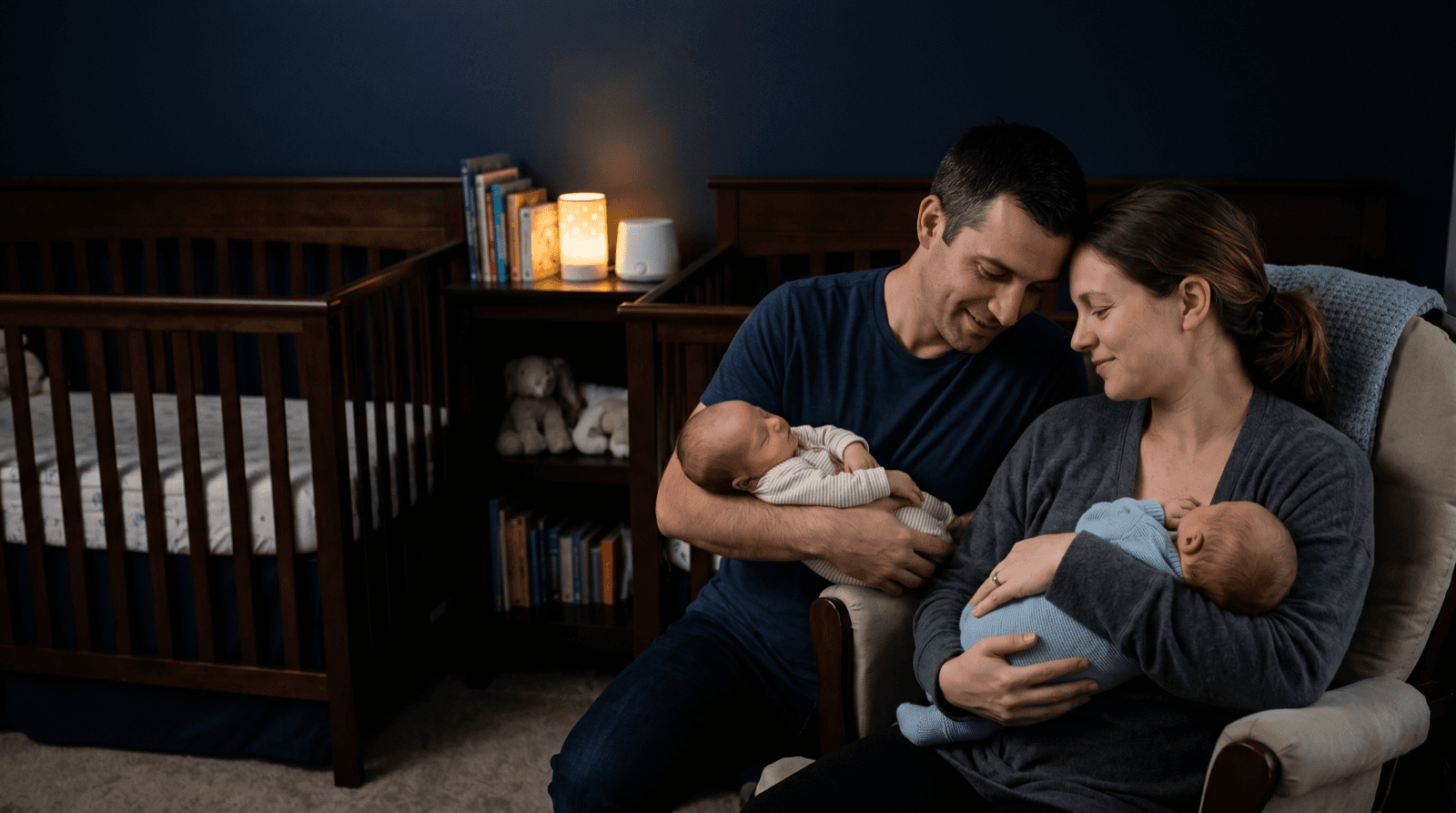
Every sleep training method covered elsewhere on this blog still applies to twins — the core mechanics of helping a baby learn to fall asleep independently don't change because there are two of them. What changes is the logistics, and that's where most twin parents actually get stuck.
Same room or separate rooms?
There's no single right answer, but here's the practical trade-off: twins in the same room from early on often adapt to sleeping through each other's noise reasonably well, because it's the only environment they've known. The first few nights of active sleep training in a shared room are usually the hardest, with the most cross-waking — but many families find it improves faster than expected.
If a shared room genuinely isn't working after a real trial period, a temporary separation — one twin in a nearby room or a portable setup — during the most intensive part of sleep training, then reuniting once both are sleeping more independently, is a reasonable middle path.
Staggering vs. syncing bedtime and naps
Syncing twins' schedules is almost always worth the upfront effort, even though it's harder in the first few weeks. A synced schedule means one predictable nap window and one predictable bedtime for both, rather than spending your whole day on a rolling cycle of feeding and settling one baby at a time.
A common practical approach: feed both twins close together (waking the sleepier one slightly early if needed), and run the bedtime routine for both in parallel or with one parent on each, rather than fully sequentially.
What to do when one wakes the other
- Respond to the waking twin quickly and quietly to minimize the disturbance window for the other
- White noise at a consistent, moderate volume genuinely helps mask normal sleep sounds between cribs
- If early sleep training nights involve more crying than your twins' shared room can absorb, consider running the most intensive nights with a temporary separation, then reintroducing the shared room
- Don't assume a wake means both are awake — give the non-stirring twin a real chance to stay asleep before assuming you need to intervene for both
Two temperaments, one method
It's common for one twin to respond quickly to a sleep training method while the other needs more time or a different approach entirely. That's not a sign you're doing it wrong — twins are still two individual babies with two individual temperaments, even when their schedules are synced.
Slept supports multiple baby profiles, so you can track and coach each twin individually — without losing the synced schedule that makes twin life actually manageable.